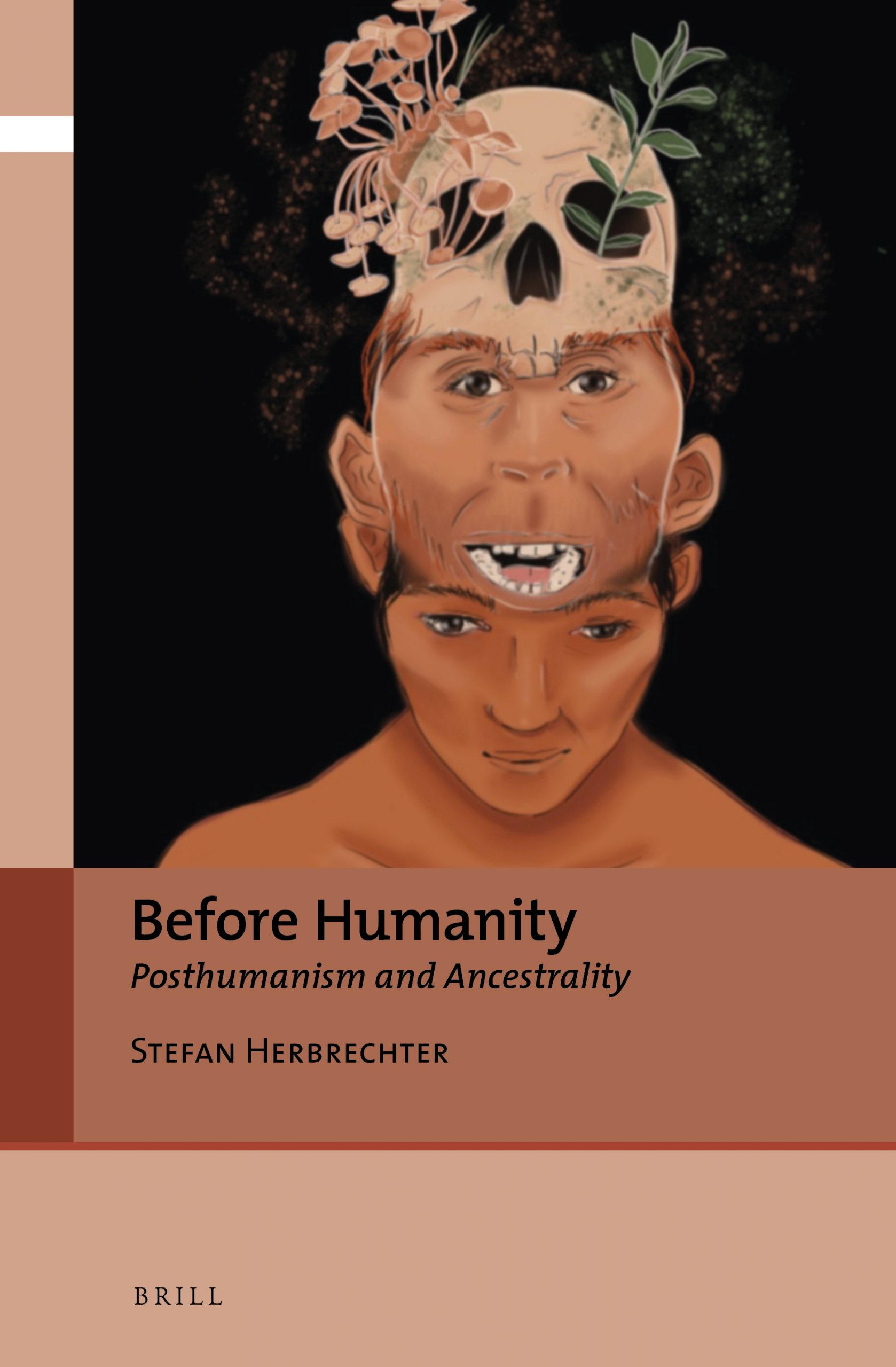
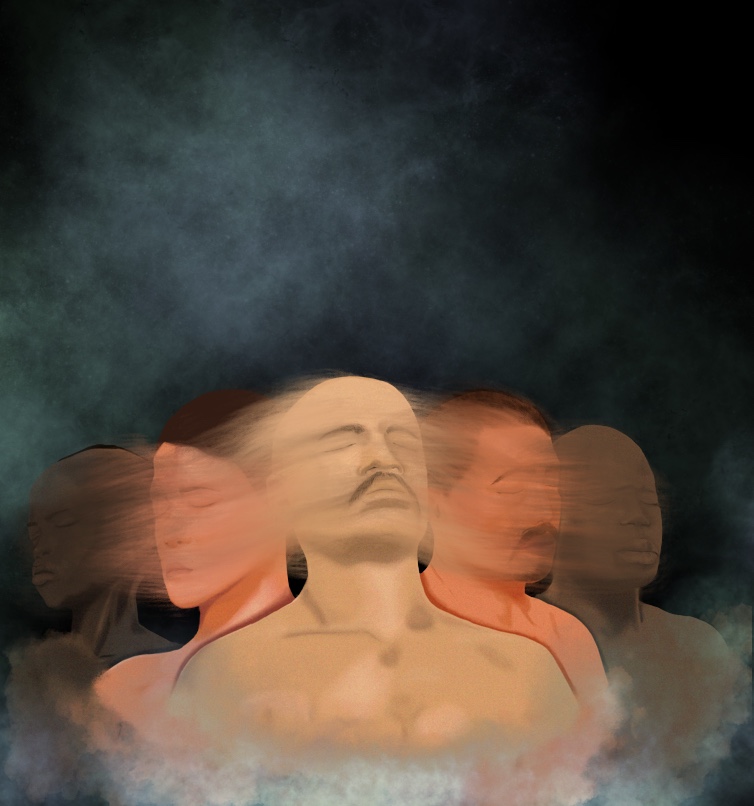
Image © Sara Herbrechter @saraanneleila.com
Before Humanity is a monograph that takes up the question of the post- in the posthuman from the position of ancestrality.
Speculating about who or what comes after the human inevitably throws us back to our very beginnings. The before in Before Humanity in this context takes on two meanings:
1) what happened before we apparently became human? – which translates into a critical reading of paleo-anthropology, as well as evolutionary narratives of hominization;
2) living through the end of a certain (humanist, anthropocentric) notion of humanity, what tasks lie before us? – which provokes a critical reading of the Anthropocene and current narratives of geologization.
In other words, Before Humanity investigates conceptualizations of humanity and asks whether we have ever been human and if not, what could, or maybe what should we have been?

Image © Sara Herbrechter @inklingillustrations.com
For free sample content and to order a copy see here.
Contents table (click to see advanced draft versions):
- BH1 – Preamble
- BH2 – Introduction – Before
- BH3 – Chapter 1 The Other Human-On William Golding’s The Inheritors
- BH4 – Interlude 1 Languages and Evolutions
- BH5 – Interlude 2 Animism without Humans
- BH6 – Interlude 3 Ape-Man
- BH7 – Chapter 2 About to Forget … the Human – On Max Frisch’s Man in the Holocene
- BH8 – Interlude 4 – Geology and Deep Time
- BH9 – Interlude 5 – Lascaux Geophilia and the ‘Cradle of Humanity’
- BH10 – Chapter 3 – Unsociable Robots
- BH11 – Conclusion – Becoming In-human
- BH12 – Bibliography
© Sara Herbrechter @inklingillustrations.com
Here is an excerpt from the “Preamble”:
Before Humanity is part of our ongoing project to challenge posthumanist futurists and techno-utopians by recalling prefigurations, genealogies and disavowals of the posthuman – and thus to remind ourselves of the essential openness and unknowability of the future. We focus on the ambiguity of before, which implies a kind of reverse thinking and an imagining of a time before origins, before there was such a “thing” called “humanity”. This goes against the predominant strain of posthumanism that tends to focus on (and maybe even hasten) what comes after humanity. Aiming for the time before time instead – the past before human “emergence”, a situation “without” narrative – does not only help “us” understand “our” stories or “our” ends better. Through the analogies and contrasts discoverable there, our attempt may also help clarify whether “our” presents and futures could well have been (p)re-figured in the pre-human. So, by conjecture, placing oneself before humanity one is asked to think one’s most basic affiliation: the one owed most naturally of all, to the human(ity) that embraces one. Thinking human nature, for example: what would be most natural? How does one place oneself naturally before what one already is? How could the non-human thinking of that not be unnatural: what indeed might it be? And what is this community of humanity, immemorial but with nonetheless traceable beginnings: absolutely capacious in that it excludes none of us, ever, so that it risks the absolutely unethical when it retains us even in our inhumanity? How might we be before humanity, both in time and space, at a time when we are running out of both and when our history might be running humanity down? Where, before humanity, do we stand, and what is it that is stood before us, thinking us back?
As we might be, in all this frenzy of posthuman times, “about to forget” the human, we are thrown back to its very beginnings. Before Humanity sets up two alternative scenarios: what happened just before we apparently became human (which involves a critique of paleontology, evolution and hominisation narratives)? And, witnessing the “end” of (at least a certain notion of) humanity, what task lies “before” the human (now)? In other words, while others might rush ahead into techno-utopias of artificial intelligence and embrace the apparent inevitability of our evolution into augmented posthumans, we are interested in the proto-, paleo-, ante-… conceptualisations on which these “science factional” scenarios rely.(1) The suspicion that develops might be articulated in the question whether we have ever been “human” (in a humanist sense) and if not, what could “we” have been? What could we still be?
(1) On the notion of “science faction” see Herbrechter, Posthumanism: A Critical Analysis, pp. 107-134.