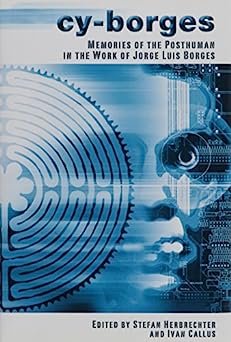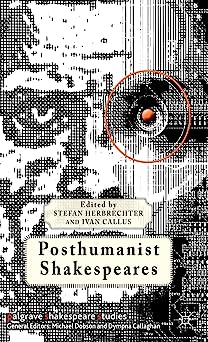
My volumes of Collected Essays on Critical Posthumanism are appearing in the CPH Brill series. The first two volumes contain essays written over the last decade or so (some are republished in updated versions, some are new and here published for the first time).
Volume 2: Solidarities with the Non/Human, or, Posthumanism and Literature
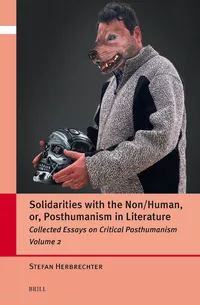
Contents:
The below are pre-publication versions of the chapters:
Section I – Posthumanism Writes Back:
Section II – Animal Writing:
Section III – Life Writing:
Postface: Posthumanism and the Death of Tragedy
Here is a short extract from the “Introduction: Critical Posthumanism and Literature”:
Is there something like ‘posthumanist literature’? The phrase, ‘posthumanist literature’, might well turn out to be a contradiction in terms, if one starts by differentiating between posthumanism, the posthuman and posthumanisation, on the one hand, and literature, the literary and the post-literary (or the question of the ‘survival’ of literature), on the other hand. This conceptual framework leads to a further differentiation, namely between that of a ‘literature of the posthuman’ and ‘posthumanist literature’. Looking at contemporary examples, one notices that literature engages with posthumanism (understood as a discourse) and the posthuman (understood as a figure) in a number of ways. Thematically, a literature of the posthuman is concerned with a variety of topics that are associated with figurations of the posthuman, for example, climate change, AI, androids and robots, the Anthropocene, enhancement, postanthropocentrism, the question of the ‘animal’, object ontology, cyborgisation, dis/embodiment, technological enhancement, non/human futures, to name just the most obvious. Conceptually, however, a posthumanist literature implies a level of postanthropocentric (self-)reflexion that necessarily problematises the very idea of the ‘literary’ as a practice and of ‘literature’ as one of the most central humanist institutions. Maybe the most obvious, pragmatic, question that arises from such a stylistic challenge of posthumanist literature understood as no longer written by and addressed to humans would be: who might be the addressee of such ‘nonhuman fiction’?
The underlying topology of my argument for ‘solidarities with the non/human’ in this volume and my understanding of critical posthumanism in relation to literature more generally depends on the distinction between posthumanism as a discourse and the posthuman as a figure. Posthumanism is that discourse that takes the posthuman as its ‘object’, i.e. posthumanism is about the posthuman and its meanings. The post- in posthumanism and in the posthuman, however, cannot be an absolute break with or transcendence of what it qualifies. Posthumanism is in that sense not straightforwardly ‘after’ or ‘beyond’ humanism, but qualifies it and in doing so can be understood as a critique of what it ‘posts’. Hence the phrase ‘critical posthumanism’ which highlights that we are tracking and aiming for a ‘deconstruction of humanism’, which understands humanism not as finished or complete but as in ‘crisis’ – one could call that ‘late humanism’, humanism confronting its own end(s), and in doing so seeking rearticulation, renewal or indeed gesturing towards something entirely other (hence also sometimes the strategic use of ‘inhumanism’ and the ‘inhuman’). Similarly, the posthuman cannot be (despite the way it is used by some transhumanists) some form, being or species that comes after or has moved beyond the human. The post, just like in posthumanism, here merely qualifies rather than negates or transcends (the human). It merely signals that we are dealing with a human that understands itself as no longer (quite) human. In doing so, it gestures either to a ‘new human’, an ‘other human’ or something radically other that cannot (yet) be named as such. Posthumanist is the adjectival form of posthumanism, in this sense. It can strictly speaking only be used to designate something that implies a critique of humanism and its main characteristic or its central value, namely, its anthropocentrism – the idea that humans are exceptional, and that they share something that is both unique and universal, usually an essential ‘human nature’. A whole string of other values and binary oppositions build on this to constitute what one might call a ‘worldview’ or a ‘metaphysics’, i.e. a way of making sense of the world. Given that humanism is a worldview that has dominated the ‘West’ for more than five hundred years and arguably even longer, it is not surprising that prefigurations of contemporary posthumanist critique of humanism exist alongside humanism. Humanism has indeed been haunted by its posthumanisms from the very beginning. This is the reason why the posthumanist readings in this volume span ‘across the ages’ (from Shakespeare to contemporary literature, or from early to late humanism, one might say).
In terms of literature this leads to the following classification: literature is a humanist institution whose main purpose either explicitly or implicitly has always been to show a human reader what it is to be human. It is an essential part of what Giorgio Agamben calls the ‘anthropological machine’. Its aim is ‘anthropogenic’ – it ‘produces’ and confirms readers in their humanity. In this strong sense, there cannot be anything like ‘posthumanist literature’ in the strict, most literal sense (which is an interesting sense to consider, as it happens, and key to this debate) because literature that would stop implying its human addressee would no longer be literature. It would be something else. Even when literature depicts posthumans it can only do so within an anthropomorphic (but not necessarily anthropocentric) framework. A literature in which the posthuman figure proliferates might be called, more promisingly, a ‘literature of the posthuman’. However, this would still not be ‘posthumanist literature’. That does not mean that literature cannot engage with posthumanism or negotiate posthumanist ideas. Some literature is (undeniably, also) critical (in the same sense critical posthumanism is critical). That is also one reason why literature endures or ‘survives’. It challenges traditional notions of humanity, surprises by extremes that humans have to negotiate, it extends what it means to be human, but ultimately, if it wants to be read, it must also reconfirm the (re- or deconstructed) human as its intended reader. It can also challenge and extend what is meant by literature, but ultimately, since it wants to be read as fiction – this is its source of power, namely that it is free to imagine anything – it must also reconfirm the existence of the institution (and the ‘time’ or context) it belongs to and by which it will be judged.
There is a growing body of critical work that reads literature in terms of the ways in which it engages with ‘nonhuman’ forms of agency – narratives by or about nonhuman characters. Some of the readings in this volume that wish to be understood as ‘solidary’ of nonhuman animals, the environment, or indeed machines, play with the notion of ‘animal writing’, ‘life-writing’, or ‘ecography’. Animal writing could be understood as writing about animals, by using animal characters, e.g. fables, however; but it could also be understood literally, as (nonhuman) animals, writing, traces and tracks, spider webs and elephant cemeteries and so on. Posthuman literature might be precisely that: literature ‘written’ not by humans, although ‘nonhuman literature’ would then be the more exact term. This ‘literature’ if it was read as literature by humans would still be unlikely to be posthumanist, however, as long as these reading protocols are not also changed. Life-writing – hyphenated – could be understood, more than an extended notion of the biographical, namely as a ‘vitalist’ notion of life being both the object and the subject of writing. Again, the question arises, who would life-writing be written for, who is its addressee? Generalising the notion of writing – as has been happening, following Derrida’s move, since the ‘geological turn’ and the idea of the ‘Anthropocene’ – as something that all material changes constitute a form of ‘writing’, most of which happens in the absence of any human reader, or, even before or outside life, and thus of any reader, full stop. The realisation and depiction of the fact that human agency is only one (often insignificant) source of writing and that it is entangled with a myriad of nonhuman actors and factors certainly has entered literature in the time of the ‘Anthropocene’. It leads to a heightened ecological consciousness in both literature and criticism – what I would like to call ‘ecography’ – but again, ultimately, the question of the addressee needs to be posed. I assume, even the most radical uptake of posthumanist ideas in literature ultimately happens for humanist reasons; it is supposed to make us ‘better’ readers, ‘better’ humans. I do not think that this is problematic at all. Who else would care about ‘solidarities with the non/human’ than humans, after all?